Planting and pruning hydrangeas: which to cut back when
For pruning, hydrangeas fall into two groups. Panicle and smooth hydrangeas (such as 'Annabelle') flower on this year's shoots: cut them back to 25-60 cm in February or March. Bigleaf and mountain hydrangeas flower from buds that grew last year: in spring take off only the faded flowers, or they will not flower that year. Plant in autumn or spring, with plenty of water; for limy soil choose panicle or smooth hydrangea, as bigleaf hydrangea wants acid or neutral soil and afternoon shade.
Updated: October 26, 2026 · Prices checked: October 26, 2026 · Data and prices from our plant database, worked out for your country. How our data is made

Which hydrangea is which?
The panicle hydrangea bears cone-shaped panicles, white turning pinkish, from July to October. It is the least demanding: it takes sun, limy soil and hard winters. The smooth hydrangea and its best-known cultivar, 'Annabelle', bear large white balls of flowers and are hardy too.
The bigleaf hydrangea is the classic blue or pink mophead (or flat lacecap) hydrangea; the smaller mountain hydrangea is its relative. They are the loveliest and also the fussiest: they want part shade, plenty of water and acid or neutral soil, and their flower buds can freeze. Less common are the oakleaf, the rough-leaved and the climbing hydrangea, which climbs a wall or tree to over 10 metres.

- Pruning
- hard, in early spring
- Light
- full sun, part shade
- Limy soil
- takes it
- Hardiness
- down to -34 °C
- Price per plant
- HUF 7,000

- Pruning
- hard, in early spring
- Light
- part shade, full sun, shade
- Limy soil
- takes it
- Hardiness
- down to -34 °C
- Price per plant
- HUF 9,200

- Pruning
- hard, in early spring
- Light
- part shade, full sun, shade
- Limy soil
- takes it
- Hardiness
- down to -34 °C
- Price per plant
- HUF 7,800

- Pruning
- hard, in early spring
- Light
- full sun, part shade
- Limy soil
- takes it
- Hardiness
- down to -40 °C
- Price per plant
- HUF 5,000

- Pruning
- in spring, only the faded flowers
- Light
- part shade, shade
- Limy soil
- does not
- Hardiness
- down to -23 °C
- Price per plant
- HUF 5,000

- Pruning
- in spring, only the faded flowers
- Light
- part shade
- Limy soil
- does not
- Hardiness
- down to -23 °C
- Price per plant
- HUF 7,000

- Pruning
- hardly: only dead stems
- Light
- part shade, full sun, shade
- Limy soil
- does not
- Hardiness
- down to -29 °C
- Price per plant
- HUF 7,700

- Pruning
- hardly: only dead stems
- Light
- part shade
- Limy soil
- does not
- Hardiness
- down to -18 °C
- Price per plant
- HUF 8,000

- Pruning
- after flowering, overlong shoots
- Light
- part shade, shade
- Limy soil
- does not
- Hardiness
- down to -34 °C
- Price per plant
- HUF 7,400
|
Hydrangea
|
Pruning
|
Light
|
Limy soil
|
Hardiness
|
Price per plant
|
|---|---|---|---|---|---|
|
Panicle hydrangea
Deciduous
|
hard, in early spring | full sun, part shade | takes it | down to -34 °C | HUF 7,000 |
|
Smooth hydrangea 'Annabelle'
Deciduous
|
hard, in early spring | part shade, full sun, shade | takes it | down to -34 °C | HUF 9,200 |
|
Smooth hydrangea
Deciduous
|
hard, in early spring | part shade, full sun, shade | takes it | down to -34 °C | HUF 7,800 |
|
Limelight panicle hydrangea
Deciduous
|
hard, in early spring | full sun, part shade | takes it | down to -40 °C | HUF 5,000 |
|
Bigleaf hydrangea
Deciduous
|
in spring, only the faded flowers | part shade, shade | does not | down to -23 °C | HUF 5,000 |
|
Mountain hydrangea
Deciduous
|
in spring, only the faded flowers | part shade | does not | down to -23 °C | HUF 7,000 |
|
Oakleaf hydrangea
Deciduous
|
hardly: only dead stems | part shade, full sun, shade | does not | down to -29 °C | HUF 7,700 |
|
Rough-leaved hydrangea
Deciduous
|
hardly: only dead stems | part shade | does not | down to -18 °C | HUF 8,000 |
|
Climbing hydrangea
Deciduous
|
after flowering, overlong shoots | part shade, shade | does not | down to -34 °C | HUF 7,400 |
The table shows the hydrangeas sold in your country, by pruning group. Hardiness is how much frost the plant itself takes: the flower buds of bigleaf and mountain hydrangeas can freeze in milder frost. The price is the typical price of a plant of the usual size.
Where to plant?
- Light: panicle and smooth hydrangeas grow in sun too if watered. Bigleaf and mountain hydrangeas belong in part shade: morning sun suits them, hot afternoon sun burns their leaves and flowers. The best spot is an east-facing wall or the edge of a tree's canopy.
- Soil: rich in humus, moist but free-draining. On limy soil (most gardens in the Carpathian Basin) panicle and smooth hydrangeas are the safe choice; the smooth one's leaves may yellow a little on very limy ground. Plant a bigleaf hydrangea in limy soil only in a large hole filled with ericaceous (rhododendron) compost, and even then its leaves may yellow.
- Water: hydrangeas are among the thirstiest shrubs. Do not plant them in a sunny, dry spot of a garden without watering; choose from the drought-tolerant shrubs there, and from shrubs for part shade for part shade.
- Wind: the large-flowered shoots can flop in wind and after a summer downpour. Plant them in a sheltered spot; you can put a small support ring around 'Annabelle' in spring.
Planting step by step
- Plant in spring, from April to May, after the frosts: a newly planted hydrangea is sensitive in its first winter, and this way it has a whole summer to root. In autumn, plant only in September, so it roots in before winter. A container hydrangea can go in during summer too, but not in a heatwave.
- Dig a hole twice as wide as the root ball and loosen its bottom. Mix ripe compost into the soil you dug out, and ericaceous (rhododendron) compost too for bigleaf and mountain hydrangeas.
- Set the plant as deep as it was in the pot. Space the plants at their mature width: bigleaf and smooth hydrangeas about 1 metre apart, panicle hydrangeas 1.2-2 metres.
- After planting, water in well with 10-20 litres a plant, and cover the base with 5-7 cm of bark mulch. Pine bark is especially good for bigleaf hydrangea, as it makes the soil slightly more acid.
Pruning: which to cut back when
When to prune depends on where the flowers grow. Panicle and smooth hydrangeas flower at the tips of this year's shoots, grown in spring, so in winter there is no flower bud on them to cut off. The flower buds of bigleaf and mountain hydrangeas form at the end of the summer before, in autumn: cut these back hard in autumn or spring and you cut off the flowers.
- Panicle and smooth hydrangeas, February-March: cut last year's stems back to just above a healthy pair of buds. Hard pruning (to a framework of about 25 cm) gives fewer but larger flowers on strong, upright stems; for a taller shrub, cut at about 60 cm. You can leave the dry flowers on over winter; they look good.
- Bigleaf and mountain hydrangeas, March-April: cut the faded flower head off each shoot just above the first strong, swelling pair of buds. On an old plant you can also cut one or two of the oldest stems at the base each year; new shoots grow in their place. Leave the old flower heads on over winter, as they protect the buds below from frost. Remontant bigleaf hydrangeas such as 'Endless Summer' also flower on this year's shoots, so they flower even after a frost or a wrong cut.
- Oakleaf and rough-leaved hydrangeas: they need hardly any pruning; in spring cut out only dead and overlong stems.
- Climbing hydrangea: after flowering, in summer, cut back overlong shoots. Its flowers open mostly on the upper part of the shoots, so leave as much of that as you can.
- If a spring frost has caught the shoots, cut the frozen part back to the first sound pair of buds.
Why is my hydrangea not flowering?
- You pruned at the wrong time: cut a bigleaf hydrangea back in autumn or spring and you cut off its flower buds. It makes a fine, leafy shrub without flowers.
- The flower buds froze: the bigleaf hydrangea itself survives the winter, but its flower buds can freeze in a hard frost or a late frost in April. A brown or black bud will not flower.
- Too much shade: in deep shade a hydrangea makes leaves and hardly any flowers.
- Too much nitrogen: a nitrogen-rich lawn fertiliser grows leaves, not flowers.
- It dried out in late summer: next year's flower buds form in August and September. If the plant goes thirsty then, it flowers less the next summer.
- It is still young: a newly planted hydrangea spends its first year or two on its roots and flowers less.
Blue or pink?
The flower colour of bigleaf and mountain hydrangeas depends on the soil's pH. In acid soil (below pH 5.5) the plant takes up aluminium from the soil and its flowers turn blue; in neutral or limy soil (above pH 6.5) the aluminium stays locked up and the flowers are pink. In between you get violet. White cultivars do not change, and the pinkish autumn colour of panicle hydrangeas depends on the cultivar, not the soil.
For blue flowers the soil has to stay acid: with ericaceous compost, pine bark mulch, and the hydrangea colourant sold in shops (aluminium sulphate), at the dose on the pack. On limy soil this is hard to keep up for long, as lime comes back from the garden soil and from tap water; there a blue hydrangea keeps best in a large tub of ericaceous compost, watered with rainwater.
Watering and winter protection
- In dry summer weather, water deeply once or twice a week, 10-20 litres a plant, ideally in the morning. Leaves wilting in the afternoon on a hot day are no problem if they recover by evening; if they still hang in the morning, the plant is thirsty.
- Keep the base covered with mulch so the soil dries out more slowly.
- Panicle and smooth hydrangeas need no winter protection.
- In late autumn, cover the base of a young bigleaf hydrangea with 10-15 cm of leaves or pine bark. If a late frost comes in spring after it has leafed out, cover it with horticultural fleece for the night.
- The roots of a hydrangea in a tub freeze far more easily than in the ground: move it to a frost-free, light place for the winter. Wrapping the tub is not enough: in an average winter the rootball freezes through all the same.
Sources
The advice rests on these expert pages and laws, adapted to Central European winters and soils. The tables come from our own plant database.
- Gartenakademie Rheinland-Pfalz: Hortensien (Hydrangea)
- Bayerische Gartenakademie: Ziersträucher jetzt schneiden
- RHS: Hydrangea pruning
- RHS: How to grow shrubby hydrangeas
More guides
 How to plan a garden, step by step
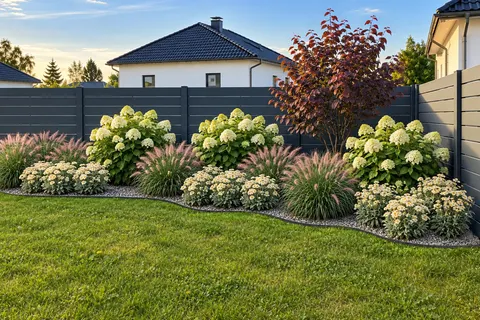
A garden is best planned in six steps: survey the site (light, soil, water, winter), decide what you will use it for, set the framework that still shows in winter, then lay out the border in layers, tall at the back and low at the front. Choose plants so that something flowers from spring to autumn, and finally work out the number of plants and the cost from the planting distances. Our garden planner works by the same rules.
 Fast-growing hedges: how much each grows in a year
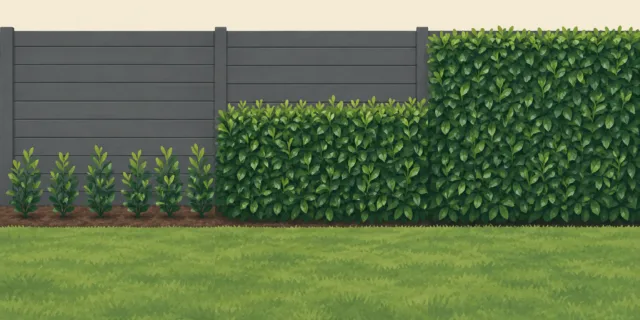
The fastest hedge plant is the Leyland cypress, growing about 90 cm a year, followed by cherry laurel 'Novita', firethorn and western red cedar at about 50 cm a year, then privet at 40 cm. How long a 180 cm hedge takes to screen depends more on the size of plant you buy: several years from small plants, one or two summers from large ones, but at many times the price per metre. The tables use the current shop prices in your country.
 Ground cover plants against weeds: which goes where, and how many you need
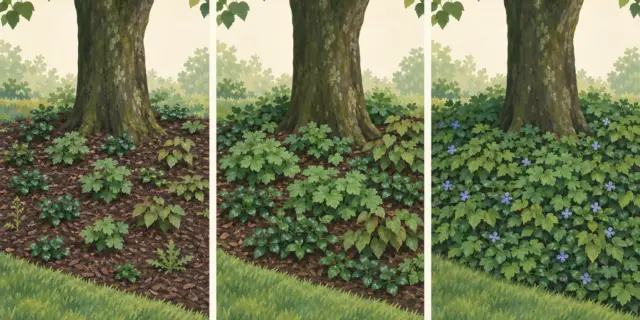
A ground cover keeps weeds out once it has closed up: until then, usually for two or three summers, it needs mulch and weeding. Under trees and in shade, lesser periwinkle, bigroot geranium, barrenwort and barren strawberry do best; in sunny, dry places stonecrops, thymes and creeping junipers. Most perennial ground covers take 9-18 plants per square metre. The tables work out what a square metre costs at today's shop prices in your country.
 Planting a hedge: how many plants per metre, and what it costs
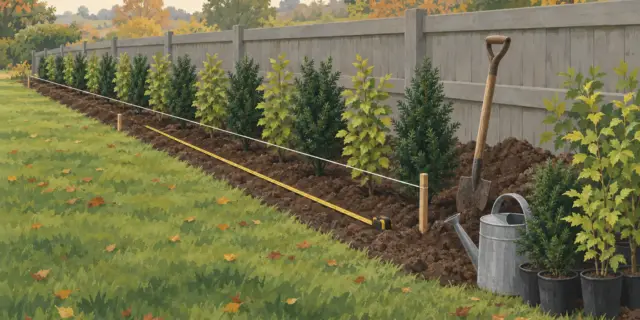
Most hedge plants go in at 2-4 plants per metre: Leyland cypress 2, cherry laurel and photinia 2.5 (40 cm apart), yew 3, hornbeam 3.5, privet and beech 4. The plants go in one row, 80 cm from the fence, in autumn or early spring. What the hedge costs depends most on the size of the plants: the table works it out at today's shop prices in your country, for the length of your own hedge.
 Building a rock garden: stone, soil and plants step by step
A rock garden belongs on a sunny, gentle slope, in lean, free-draining soil: one third garden soil, one third coarse sand, one third crushed stone. Lay the stones, all of one kind, in layers leaning the same way and sunk a third to a half into the ground, so that about two fifths of the surface is stone. Four to six plants per square metre are enough: creeping junipers and grasses make the frame, and between them cushion perennials, stonecrops and thymes flower from March to October.
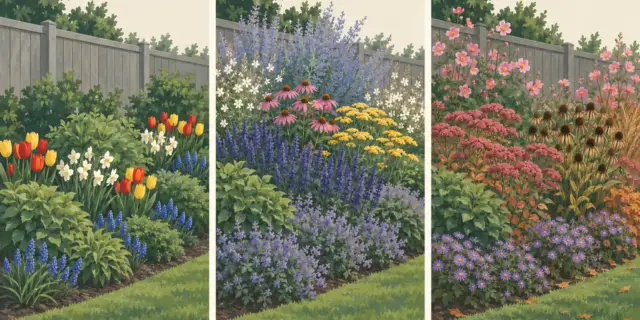 A perennial border that flowers all summer: plants, layout, numbers
A perennial border flowers from spring to autumn when its backbone is long-flowering perennials that bloom from June to September (catmint, woodland sage, coneflower, yarrow, Russian sage, gaura), with bulbs around them for spring and Japanese anemone, sedum and asters for autumn. Plant in groups of 3-7, tall at the back, low at the front; on average you need 5-7 plants per square metre. The calendars show the hardy perennials for a sunny spot that shops in your country sell most widely, with the price per plant.
 Planting tulips, daffodils and crocuses: when, how deep, how many
Spring-flowering bulbs go in in autumn: daffodils, crocuses and hyacinths from September to October, tulips from October to November, until the ground freezes. A bulb goes two to three times its own height deep (tulips and daffodils about 12-15 cm, crocuses 8-10 cm), tip up, at least twice its width from the next. Between perennials, 20 small, 8 medium and 4 large bulbs per square metre are enough. After flowering, leave their leaves on for six weeks.
 Planting and pruning lavender: when, where, how much to cut
Lavender wants a sunny spot and loose, free-draining soil, and likes limy soil too; plant it in spring, in April or May, 30-45 cm apart for a hedge. Prune it twice a year: in spring, in late March or April once hard frosts are over, cut the shoots back by about two thirds, but always only into green, leafy growth; after flowering, in late July or August, take off the faded flower stalks with the top 2-3 centimetres of leaves, shaping a dome. Never cut into the bare, woody part, as lavender does not regrow from it. English lavender and 'Hidcote' survive hard winters, lavandin is a little more tender, and French lavender takes only mild winters.