Luzula sylvatica
Greater woodrush (Luzula sylvatica) is an ornamental grass that reaches 60 cm × 90 cm after ten years. Light: part shade, shade. Hardy down to -23 °C. Sold in local shops from about CZK 59.

A tough, evergreen, mat-forming, grass-like perennial with broad, glossy, dark green leaves edged with fine hairs and brownish flower panicles rising above the foliage in spring. It is one of the most reliable ground covers for deep shade, under trees and in north-facing positions. It copes with root competition and tolerates clay soil, but prefers slightly acidic, humus-rich, moist soil and is not suitable for lime-rich soil. It looks tatty in prolonged drought, so water it during dry spells and cut back damaged leaves in spring.
| Group | Ornamental grass |
| Light | Part shade, shade |
| Mature size | 60 cm × 90 cm |
| Ultimate size | 30–80 cm × 0.4–1.5 m |
| Hardiness | down to -23 °C (USDA 6, RHS H7) |
| Soil | Average garden soil, Clay, Sandy, Acidic |
| Foliage | Evergreen |
| Flowering | April–June, bronze |
| Water need | Medium |
| Drought tolerance | Medium |
| Maintenance | Low |
| Root aggressiveness | Low |
| Suckering | no data |
| Spreading | Medium |
| Distance from buildings | no data |
| Distance from paving | no data |
| Litter | not typical |
| Planting distance | 40 cm |
| For dogs | no data |
| For cats | no data |
| For children | no data |
| Typical price | from about CZK 59 |
Toxicity data is for information only. If your pet or child has eaten a plant, contact a vet or a doctor.
The same plant is sold as a small pot and as a specimen several metres tall, and the price follows. Prices are rounded and for guidance only.
|
Size
|
Typical price
|
|---|---|
| size not stated | approx. CZK 59 – CZK 230 |
Data updated: November 22, 2026 · How our data is made
Data sources: Royal Horticultural Society (RHS), BOKU Wien, Természetvédelem.hu, Slov-Lex, Wikipedia
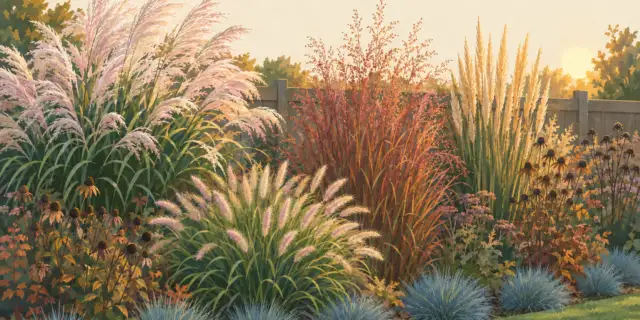 Ornamental grasses: which goes where, and when to cut them back
Tall grasses (Chinese silver grass, switchgrass, feather reed grass) belong in sun, at the back of a border or standing alone; low ones (blue fescue, sedges, 'Hameln' fountain grass) at the edge and in rock gardens; sedges and Japanese forest grass in shade. Leave deciduous grasses standing in winter and cut them back to 10-20 cm in February or March, before they shoot; do not cut evergreen or semi-evergreen grasses back, only comb out the dead leaves in spring. Plant warmth-loving grasses (silver grass, fountain grass, switchgrass) in spring.
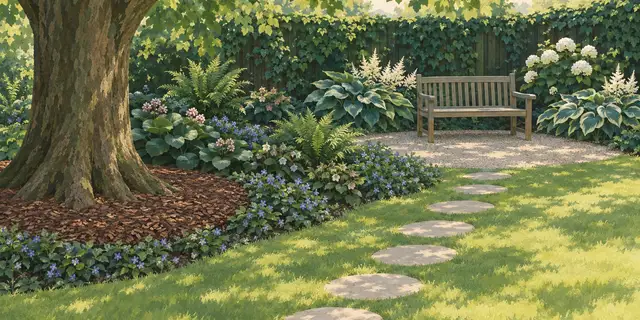 Shade-tolerant plants: what to plant in a shady garden
In a shady garden, first look at what kind of shade you have: how many hours of sun the spot gets, and whether the soil is dry. Under a large tree, in dry shade, plant lesser periwinkle, bergenia, hellebores, bigroot geranium and barrenwort; on the north side of the house, in moist soil, hostas, astilbes, Siberian bugloss and ferns. Among shrubs, yew, cherry laurel and hydrangea take shade. The tables show the plants for full shade sold in your country, at today's prices.
Besides the cookies the site needs to work, we would like to use analytics and advertising cookies (Google, Facebook), if you allow it. Details
