Berberis julianae
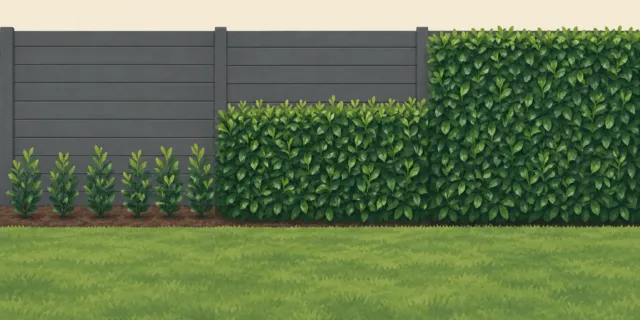
Wintergreen barberry (Berberis julianae) is a hedge plant that reaches 2 m × 1.5 m after ten years. Light: full sun, part shade. Hardy down to -23 °C. Drought tolerance: medium. Mildly toxic to children.

A dense evergreen barberry with glossy spiny-edged leaves and three-pronged thorns 2 to 4 cm long: clipped or left free it makes a practically impenetrable security hedge. Fragrant yellow flowers come in spring, bloomy blue-black berries in autumn, and some of the leaves turn red and bronze for winter. It is undemanding and accepts most well-drained soils, but pruning is a job for thick gloves and it does not belong next to paths or play areas.
| Group | Hedge |
| Light | Full sun, Part shade |
| Size after 10 years | 2 m × 1.5 m |
| Ultimate size | 1.8–3 m × 1.2–2.5 m |
| Hardiness | down to -23 °C (USDA 6, RHS H7) |
| Soil | Average garden soil, Clay, Sandy, Calcareous |
| Foliage | Evergreen |
| Flowering | April–June, yellow |
| Water need | Medium |
| Drought tolerance | Medium |
| Maintenance | Medium |
| Root aggressiveness | Low |
| Suckering | no |
| Spreading | Low |
| Distance from buildings | at least 1.5 m |
| Distance from paving | at least 0.5 m |
| Litter | not typical |
| Planting distance | 100 cm |
| For dogs | Mildly toxic (uncertain) |
| For cats | Mildly toxic (uncertain) |
| For children | Mildly toxic |
| Typical price | no data |
Toxicity data is for information only. If your pet or child has eaten a plant, contact a vet or a doctor.
Data updated: October 8, 2026 · How our data is made
Besides the cookies the site needs to work, we would like to use analytics and advertising cookies (Google, Facebook), if you allow it. Details